
The Business Case for W-9 Compliance Management and Vendor Tax Documentation Control
Executive Summary
For organizations that engage contractors, suppliers, or vendors requiring 1099 reporting, maintaining accurate and up-to-date W-9 documentation delivers measurable financial and operational benefits.
A disciplined process for collecting W-9 forms at onboarding and periodically reconfirming supplier tax information can deliver:
$150,000 to $1.5 million in annual avoided costs and compliance exposure, with ROI commonly exceeding 10×–30× relative to the cost of administering W-9 compliance.
The value comes from reducing:
- Mandatory 24% backup withholding exposure
- IRS filing penalties
- Vendor payment disputes and rework
- Year-end compliance disruption
- Audit and enforcement risk
Supplier documentation management is not simply an administrative requirement. It is a financial control that protects cash flow, reduces compliance exposure, and improves supplier governance.
Platforms such as Achilles help organizations maintain accurate supplier information, strengthen onboarding controls, and improve visibility across complex supplier ecosystems.
Download free PDF
1. Missing or Incorrect W-9 Information Creates Immediate Financial Exposure
W-9 documentation provides the information organizations need to correctly report supplier payments to the IRS.
When a supplier’s W-9 is missing, incomplete, or contains incorrect taxpayer identification information, U.S. tax rules may require the organization making payments to begin 24% backup withholding until the issue is resolved.
This creates several financial consequences:
- Backup withholding is mandatory once triggered
- Failure to withhold can make the paying organization liable for the amount that should have been withheld, plus interest
- Suppliers may dispute reduced payments, creating accounts payable and legal friction
Example Exposure

A single unresolved W-9 issue can therefore create significant cash flow disruption and compliance exposure.
2. Incorrect Vendor Tax Data Creates Avoidable IRS Penalties
Supplier tax information errors also create exposure when organizations file incorrect or incomplete 1099 forms.
IRS penalties apply per form, meaning errors multiply quickly across large supplier populations.
For 1099 forms due in 2026:
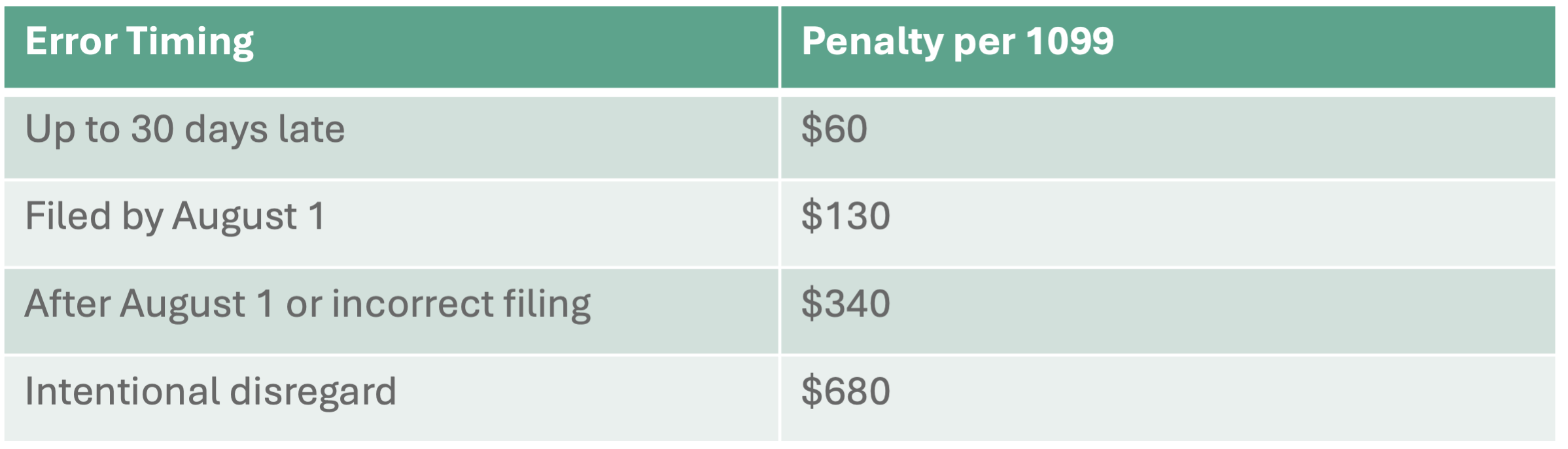
A single unresolved W-9 error can therefore result in a $680 penalty per vendor, even without intentional non-compliance.
At Scale:
- 50 incorrect W-9 records × $680 = $34,000
- 200 incorrect W-9 records × $680 = $136,000
This represents pure compliance cost—with no operational benefit created.
3. Preventing CP2100 Notices and Compliance Workflows
When 1099 filings contain incorrect Name/TIN combinations, the IRS issues CP2100 or CP2100A notices requiring corrective action.
These notices create additional administrative burden, including:
- Manual supplier research
- Vendor outreach and follow-up
- New W-9 collection requests
- Corrected tax filings
- Audit documentation preparation
The financial impact is often underestimated because much of the cost appears as internal labor rather than a direct penalty.
A proactive documentation process prevents these issues before they become year-end compliance events.
4. Reducing Administrative Cost and Year-End Cleanup
Without effective controls, W-9 management becomes a recurring operational problem.
Common challenges include:
- Missing supplier documentation
- Last-minute vendor chasing
- Accounts payable rework
- Amended 1099 filings
- Missed deadlines and overtime effort
Industry practitioners report that 10–30% of vendors may lack valid W-9 documentation when collection is not enforced upfront.
A structured process, such as a “no W-9, no payment” policy, significantly reduces this administrative burden.
5. Translating Documentation Gaps Into Annual Financial Exposure
A conservative mid-market model illustrates the potential impact.
Assumptions
- 300 vendors requiring W-9 documentation
- 15% experience documentation issues annually without controls
- Average exposure per issue: $5K–$10K
Estimated Annual Exposure Without Controls:
300 vendors × 15% affected × $7,500 average exposure
= $337,500 annual exposure
Impact of Effective Documentation Management
Best-practice W-9 programs can reduce documentation failures by approximately 60–80%.
Using a 70% reduction:
$337,500 × 70%
= $236,000 avoided annually
This excludes additional benefits from reduced audit preparation, improved supplier onboarding, and lower administrative effort.
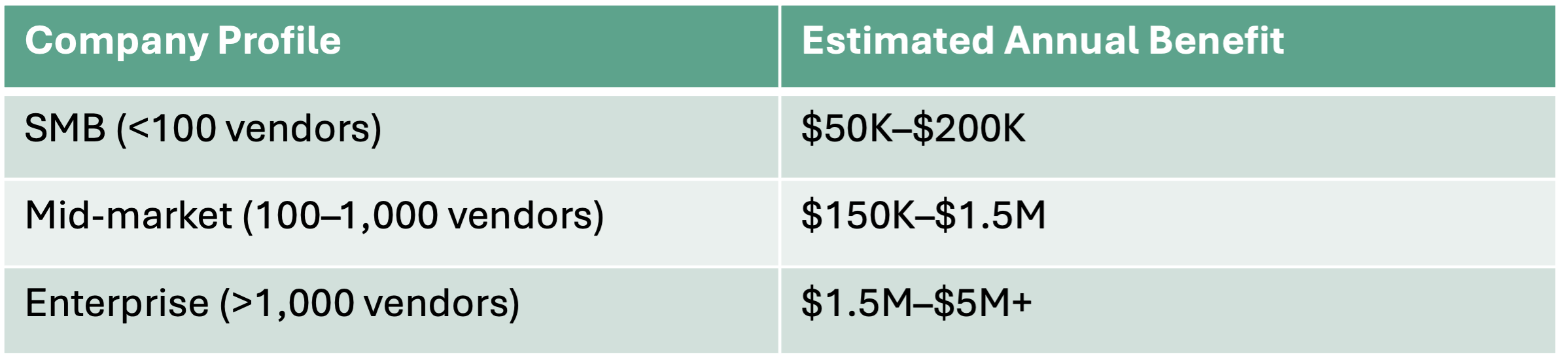
6. Typical Annual Benefit by Organization Size
The financial impact of disciplined W-9 management increases as supplier populations grow. Larger organizations process more supplier payments, issue more 1099s, and face greater exposure to documentation errors, making even small improvements in compliance highly valuable.
Typical costs to operate a compliant W-9 management program:
- $5K–$50K annually, depending on supplier volume and process complexity
7. What Effective Supplier Documentation Management Prevents
A structured approach to regulatory documentation prevents:
- Mandatory 24% backup withholding exposure
- Avoidable IRS penalties
- Supplier payment disputes
- Incorrect 1099 reporting
- Year-end compliance firefighting
- Audit readiness gaps
The key is moving from reactive document collection to proactive supplier information management.
Conclusion: Supplier Documentation is a Financial Control, not an Administrative Task
Collecting and periodically confirming W-9 information is one of the highest-return compliance controls organizations can implement.
The economics are straightforward:
- Supplier documentation gaps are common
- Financial exposure accumulates quickly at scale
- Manual correction is expensive
- Prevention costs are comparatively low
Avoiding a single IRS penalty cycle or backup withholding incident can justify years of disciplined supplier documentation management.
For organizations managing large supplier networks, supplier information controls provide the foundation for accurate reporting, stronger compliance, and reduced financial risk.