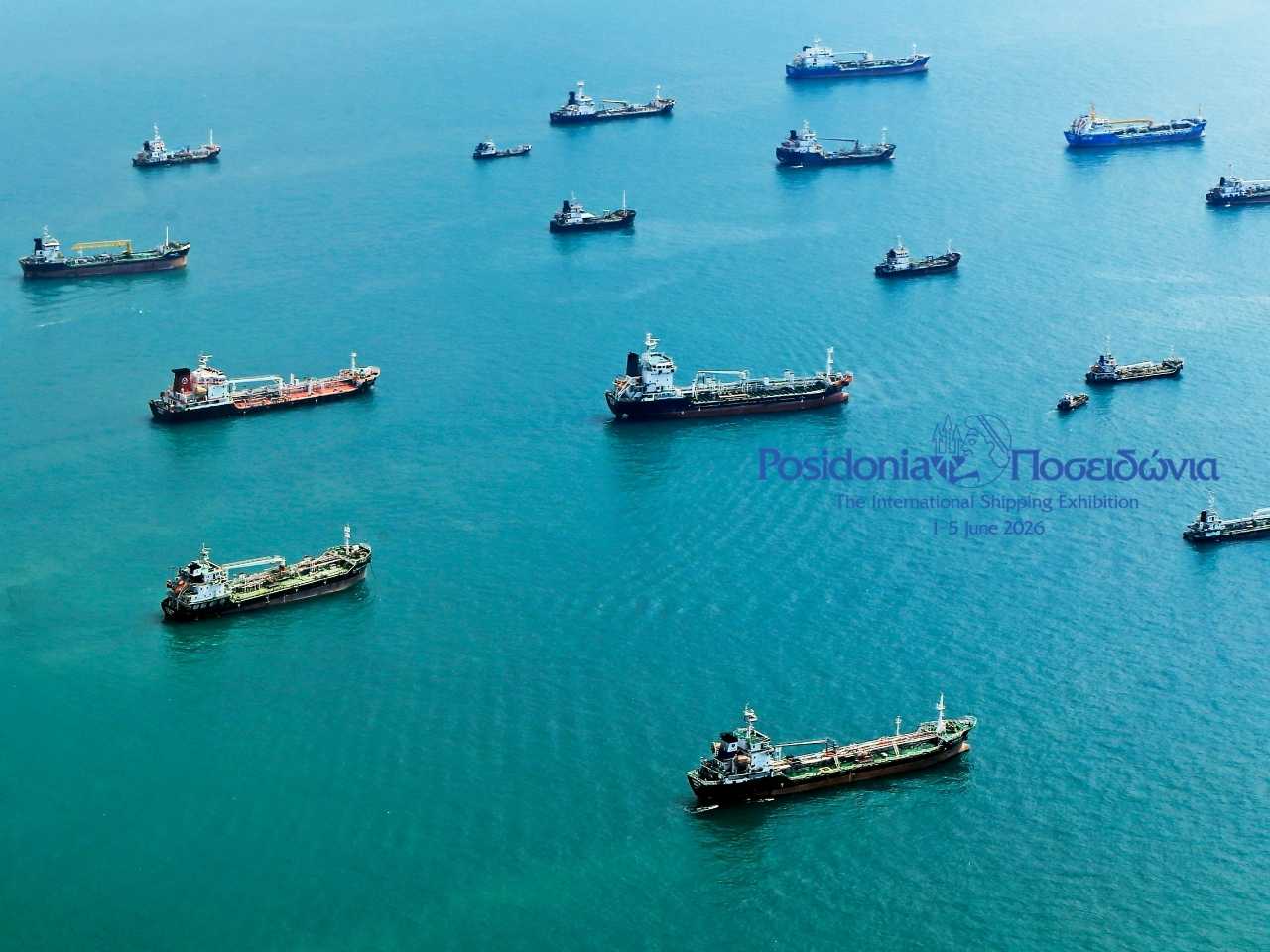
Conversations from Posidonia – we review one of the largest meetings of Maritime leaders
Posidonia happens every other year and is one of the few opportunities where shipowners, operators, financial institutions and supply chain specialists come together to discuss the challenges shaping the future of maritime.
This year, one message came through consistently across both the Achilles Maritime Network Business Advisory Group meeting and wider conversations with industry leaders: supply chain resilience is becoming a strategic business priority.
From cyber security and ESG to supplier verification and geopolitical risk, organisations are looking for more collaborative and practical ways to gain confidence in their supply chains and lower overall risk while reducing the burden on suppliers and internal processes – increasing efficiencies and ultimately lowering cost.
Cyber risk moves to the top of the agenda
Perhaps the strongest theme emerging from Posidonia 2026 was the increased focus on cyber security.
Members of the Achilles Maritime Network Business Advisory Group agreed that cyber risk should become a dedicated focus area for the Network, recognising that vulnerabilities within supplier ecosystems can quickly become business-critical risks.
But conversations across the exhibition floor revealed that there is no single approach.
For some organisations, cyber resilience is already deeply embedded within their own internal systems and processes. Others are looking for greater visibility of supplier cyber maturity, practical remediation programmes and ongoing monitoring rather than static annual reviews.
Financial institutions, in particular, highlighted cyber security alongside ESG and geopolitical instability as the three biggest areas influencing supplier risk. Their challenge is often not collecting information, but validating whether that information is accurate and remains up to date.
In all these conversations, the focus is clear: supplier assurance is shifting from periodic assessments towards continuous risk monitoring.
The rise of collaborative supplier assurance
Another recurring topic was the need to reduce duplication across the industry.
Many of the major shipping organisations work with the same critical suppliers, creating repeated requests for information, documentation and audits. Several organisations questioned whether there is a better way to share assurance activities while maintaining independent supplier approval decisions.
The Achilles Maritime Network Business Advisory Group explored opportunities for more collaborative supplier audits, including ESG-focused assessments, local-language worker interviews and alignment with emerging assurance frameworks.
Outside the formal meeting, discussions reinforced this need for efficiency. One international shipping company highlighted the challenge of onboarding key suppliers and questioned how existing supplier data and audit information could be leveraged to avoid unnecessary administrative effort.
“Digitalisation is no longer simply about collecting data. It’s about turning information into actionable insight that helps organisations anticipate risk, adapt faster and build more resilient supply chains.”
Achilles Business Advisory Group
The objective is not to remove individual oversight but to create a more streamlined assurance ecosystem that benefits both buyers and suppliers.
Supplier verification is becoming business critical
Beyond traditional compliance checks, organisations are increasingly looking for stronger supplier verification capabilities.
Bank account verification emerged as a particularly important issue, reflecting the growing need to protect against fraud and financial risk within complex global supply chains. The potential role of digital identity verification solutions and industry collaboration was a key topic of discussion.
At the same time, businesses are seeking more than a simple pass-or-fail approach to supplier assessments.
Many organisations want assurance programmes that not only identify gaps but also support supplier improvement through action plans, ongoing engagement and measurable progress.
This reflects a broader shift in mindset: from policing suppliers to helping strengthen the resilience of the entire supply chain.
Balancing digital insight with personal relationships
While technology and data continue to evolve, one traditional principle remains highly valued across the maritime sector: personal engagement.
Several industry leaders emphasised the importance of meeting suppliers face to face, particularly when evaluating operational risks that cannot always be captured through documentation alone.
Audit strategies also vary depending on the nature of the supplier. Rather than applying the same level of scrutiny across every organisation, many businesses take a proportionate approach, focusing on suppliers where health, safety or operational risks are greatest.
This balance between digital intelligence and real-world engagement is becoming increasingly important as supply chains grow in complexity.
Geopolitical uncertainty is reshaping supply chain strategies
The impact of geopolitical events continues to influence procurement and supplier management decisions across maritime.
Businesses are looking for greater visibility of supplier dependencies, stronger contingency planning and more dynamic approaches to risk management.
Annual supplier reviews are no longer seen as sufficient in an environment where conditions can change rapidly. Continuous monitoring and access to trusted, independently validated data are becoming essential capabilities for organisations seeking to build resilience.
The value of industry collaboration
One of the strongest messages from Posidonia was the value of bringing the industry together.
Participants consistently highlighted the benefits of regular sector meetings, knowledge sharing and collaborative problem solving. The Achilles Maritime Network Business Advisory Group has already agreed to increase the frequency of engagement, helping members exchange best practice and respond more quickly to emerging challenges.
As maritime organisations navigate increasing regulatory expectations, evolving cyber threats and ongoing geopolitical uncertainty, collaboration may prove to be one of the sector’s most effective risk management tools.
Looking ahead: the future of maritime industry
The conversations at Posidonia 2026 demonstrated that maritime supply chain management is evolving.
The industry is increasingly focussed on:
- Continuous supplier risk monitoring
- Stronger cyber resilience
- Collaborative assurance and audit strategies
- Improved, more efficient supplier verification
- Proportionate, improvement-focused supplier engagement
- Greater collaboration across the maritime network.
For organisations operating in an increasingly interconnected and uncertain environment, building resilient supply chains will depend not only on better data, but on stronger partnerships across the industry.