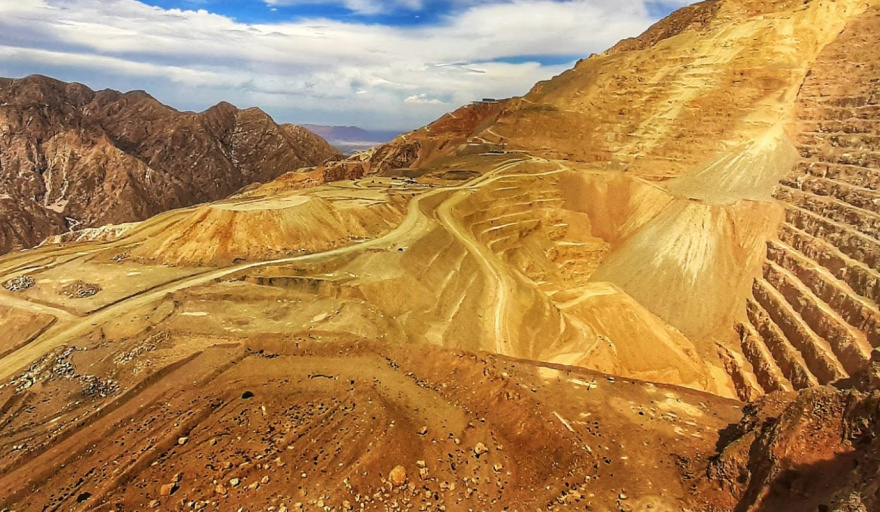
Argentina is experiencing one of the most significant periods for its mining industry in decades. The progress of world-class copper projects, particularly in San Juan, is positioning the country as a strategic player for the global energy transition and generating unprecedented investment expectations.
According to estimates released by the Government of San Juan, projects currently under development could mobilize investments exceeding USD 31.2 billion in the coming years.
However, the real challenge is not just attracting capital. It also involves answering a fundamental question: how to turn this growth into a sustainable opportunity for local suppliers without limiting access to the technology, innovation, and international expertise required by modern mining projects?
The Evolution of Needs
For years, the conversation about economic development in mining focused on the percentage of local hiring. Today, the discussion must evolve.
Mining companies need suppliers capable of meeting increasingly demanding standards in terms of safety, sustainability, regulatory compliance, traceability, cybersecurity, and risk management. In other words, local content alone is no longer sufficient: competitiveness has become as important a requirement as geographical proximity.
This vision is also beginning to be reflected in public policies. The Mining Local Development Bill promoted by the Government of San Juan proposes that 80% of mining employment corresponds to provincial residents and establishes mechanisms to strengthen the participation of local suppliers.
Local Suppliers Are Already Capturing Value
Los Azules reported that during 2024, 71% of its contracts were with San Juan-based companies, reaching purchases close to USD 97 million.
For its part, Vicuña reported that more than 60% of its current supplier network is made up of companies from San Juan, even before the start of project construction.
These cases show that supplier development is no longer a future aspiration, but a reality that is generating concrete opportunities for regional economies.
This growth is also beginning to be reflected in the professionalization level of Argentine suppliers. A sample of 200 sustainability assessments conducted on companies in the mining supply chain shows that a significant proportion already have management systems implemented or documented in areas critical to the industry.
In quality, for example, 62% of the evaluated companies have a certified or documented system; in health and safety, that figure reaches 69%; and in environmental management, 56%. These indicators demonstrate the existence of a solid foundation upon which to continue developing capabilities to meet the standards of large mining projects.
At the same time, the evaluations reveal significant challenges in areas that are gaining increasing prominence within global supply chains. While many companies have begun to work in these areas, the adoption of certified systems remains limited. Generally, less than half of documented management systems have formal certification.
In carbon management, none of the evaluated companies have a certified system. In business continuity and anti-bribery, barely 1% have a documented system. In energy management, only 1% have certification. Cybersecurity represents another significant challenge: only 2% of companies have a certified system and 35% have documented processes, while 63% still do not have a formal management system.
These data suggest that the next challenge will not only be to incorporate these disciplines but to advance in their formalization, implementation, and certification. This will strengthen the competitiveness of Argentine suppliers and facilitate their integration into world-class mining projects.
Professionalization also requires investment capacity. In the analyzed sample, nearly two-thirds of companies show pre-tax margins between 5% and 30%, reflecting a relatively healthy business base to continue investing in certifications, innovation, and continuous improvement.
However, a significant proportion still operates with very tight or even negative margins, highlighting the importance of promoting supplier development initiatives that facilitate access to best practices, technology, and international standards.
International Experience Does Not Compete with Local Development
As projects incorporate more advanced technologies, concerns often arise that the arrival of international suppliers will reduce opportunities for local companies.
Regional experience shows the opposite.
Countries like Chile have shown that collaboration between global companies and local suppliers can become a driver of technological transfer, innovation, and business development. During the first international edition of the Mining Club organized by APRIMIN in San Juan, industry representatives analyzed precisely how to strengthen regional integration and leverage the opportunities offered by the growth of copper mining on both sides of the mountain range.
The challenge is not to choose between local or international suppliers, but to build ecosystems where both contribute value.
Precisely there is where collaboration between mining companies, international suppliers, and local companies can generate greater value. The transfer of knowledge, training, and the adoption of best practices accelerate the development of capabilities that still show room for growth today. The challenge is no longer just participating in the supply chain, but doing so while meeting standards comparable to those of any world-class mining operation.
This does not mean that the balance is without challenges. In recent months, the participation of large international contractors in some Argentine projects reopened the debate on how to reconcile the incorporation of global capabilities with the effective development of local suppliers and employment. These situations reflect the importance of early planning of sourcing strategies, promoting that international experience contributes to strengthening the local ecosystem through knowledge transfer, capacity building, and the integration of Argentine companies into value chains.
The goal is not to replace international suppliers with local suppliers, but to gradually reduce capability gaps so that an increasing number of Argentine companies can compete, partner, and capture a growing share of the value generated by the industry.
Supplier Development Transcends the RIGI
Although much of the recent mining debate has focused on the Incentive Regime for Large Investments (RIGI), strengthening local suppliers appears as a cross-cutting priority.
An example is La Rioja, which presented its 2026-2030 Mining Five-Year Plan with a focus on local hiring, job creation, and strengthening provincial capabilities, even without adhering to the regime.
This demonstrates that, regardless of the regulatory model, there is a growing consensus on the need to build stronger and more competitive supply chains.
What This Means for Australian Mining Suppliers
The dynamics playing out in Argentina are familiar to anyone working in Australian mining. Local requirements and community participation have moved from aspiration to expectation, and increasingly from expectation to formal requirement.
At a federal level, the Australian Industry Participation framework encourages major project proponents to give local suppliers full, fair and reasonable opportunity to compete for work. At a state level, jurisdictions such as Queensland and Western Australia apply their own local content settings. Queensland’s Charter for Local Content, for example, sits under the Queensland Industry Participation Policy Act 2011 and sets expectations for maximising the participation of capable local businesses on state funded and state supported projects.
Indigenous participation has become just as central. The Commonwealth Indigenous Procurement Policy, administered by the National Indigenous Australians Agency, lifted its procurement target to 3% of contract value from July 2025, rising to 4% by the end of the decade. It defines an Indigenous business as one that is at least 50 per cent Indigenous owned, verified through Supply Nation, and applies mandatory minimum participation requirements to higher value contracts. While the policy governs government buying rather than private procurement directly, it has reshaped expectations across the supply chains that mining projects rely on.
For mining specifically, participation runs deeper than procurement targets. Native title agreements, Aboriginal cultural heritage approvals and Indigenous Land Use Agreements are integral to securing and maintaining a mining lease. Many major operators have gone further, embedding Indigenous procurement commitments and Reconciliation Action Plans into how they build and manage their supplier networks.
The lesson mirrors Argentina’s. Meeting a local requirement or Indigenous participation target is the entry point, not the finish line. Suppliers that can pair genuine local and Indigenous participation with certified systems in safety, sustainability, cyber security and carbon management are the ones positioned to win and keep work on world class Australian projects. Competitiveness and participation are not competing priorities. Increasingly, they are the same conversation.
The Role of Artificial Intelligence
The transformation of mining does not depend solely on new technologies applied to operations. It is also changing how companies manage their supply chains and interact with their suppliers.
As projects grow in scale and complexity, companies must manage increasingly large volumes of information related to regulatory compliance, sustainability, documentation, performance, and risks associated with hundreds of suppliers.
In this context, artificial intelligence is beginning to play an increasingly relevant role. These technologies enable process automation, analysis of large volumes of data, and generation of useful information for faster and more informed decision-making.
During the Pilares IA event, held in San Juan, mining industry leaders agreed that the adoption of artificial intelligence is progressing gradually, focusing on concrete cases that improve operational efficiency and information management. In that space, Francisco Pontoriero, president of Achilles AI, highlighted that the potential of these tools is not limited to solving problems once they occur, but will also allow anticipating risks and strengthening organizations’ prevention capabilities.
For suppliers, this evolution represents an opportunity. The digitalization of processes and the use of data-driven tools can facilitate compliance with increasingly demanding standards and improve their integration into globally operating supply chains.
The Real Challenge
The success of Argentina’s new mining cycle will not depend solely on the magnitude of investments; it will depend on the ability to build business ecosystems where local suppliers, mining companies, governments, and technology partners work together to elevate capabilities, transfer knowledge, and generate shared value.
Argentina already has a significant base of suppliers who have started this journey. The next step will be to extend this level of maturity to emerging areas such as decarbonization, operational resilience, cybersecurity, and data analytics, allowing more and more local companies to compete not only by geographical proximity but also by technical capability, innovation, and management.
The mining of the future will not have to choose between local and global; its challenge will be to ensure that both complement each other to build more competitive, resilient supply chains prepared to meet the demands of an increasingly complex industry.
From Mine to Market
From mine to market, Achilles helps mining companies demonstrate their commitment to responsible, transparent and resilient mining practices. Talk to an Achilles expert today.