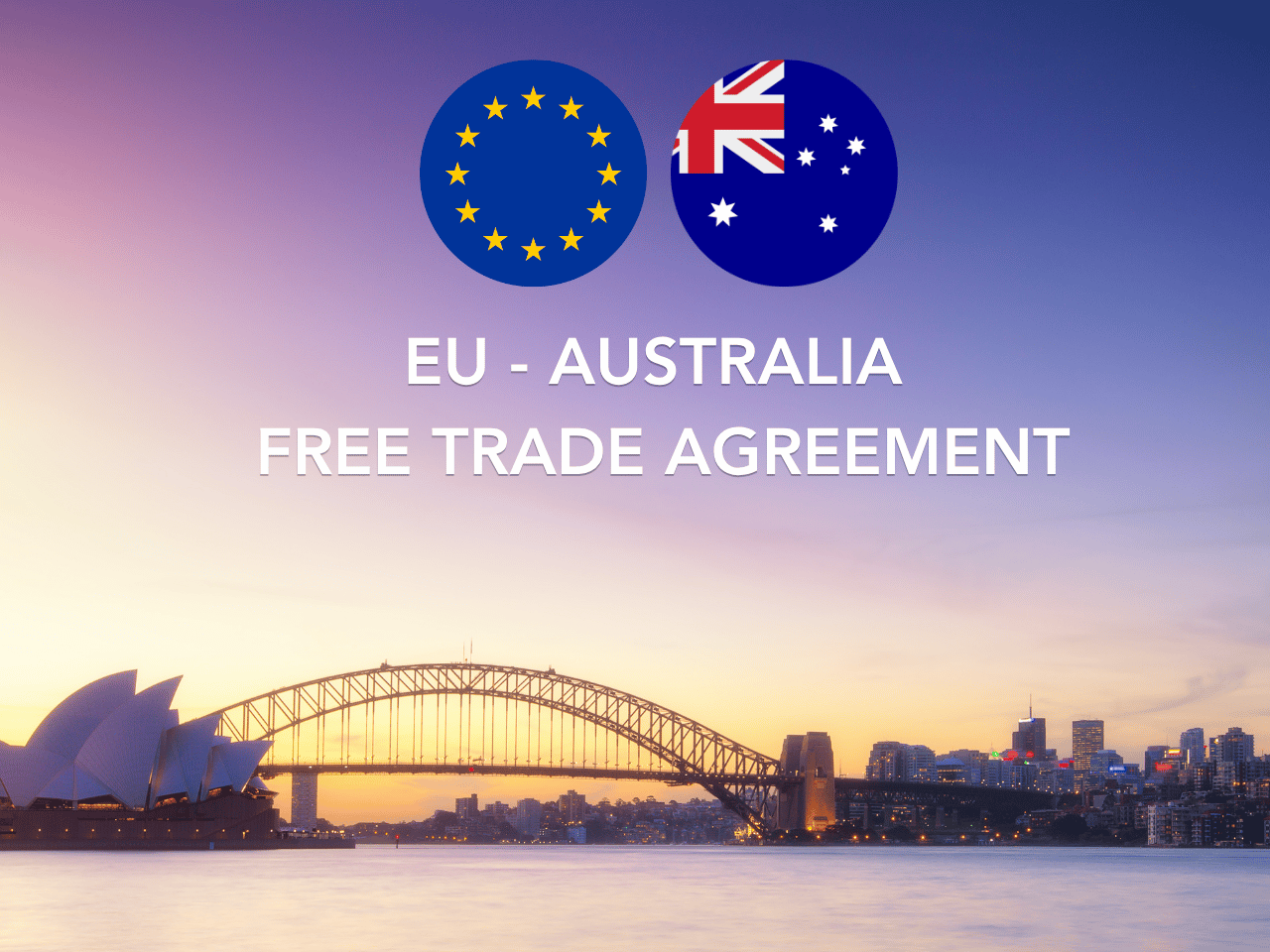
On 24 March 2026, the European Union and Australia concluded a Free Trade Agreement (FTA) following eight years of negotiations. The agreement eliminates tariffs on more than 99 percent of EU exports to Australia and removes duties on nearly all Australian goods entering the European Union, including critical minerals.
For Australian businesses, the commercial opportunity is significant. The EU is a massive, high-income market of around 450 million people that had a nominal GDP of US$21.1 trillion in 2025. As a bloc, it is Australia’s third largest two-way trading partner and second largest source of total foreign investment. According to the Australian Government Department of Foreign Affairs and Trade, the agreement will eliminate EU tariffs on Australian goods and provide exporters with more choices about where they do business. However, market access is only one part of the story.
The same agreement that opens the door to European markets also brings Australian businesses closer to the EU’s regulatory environment. This includes some of the world’s most developed expectations on sustainability reporting, human rights due diligence, forced labour prevention, environmental protection and responsible sourcing.
The EU-Australia FTA includes chapters covering trade and sustainable development, transparency, energy and resources, government procurement and responsible economic cooperation. Australian companies seeking to expand in Europe may therefore face growing expectations from EU buyers, investors, regulators and procurement teams. These expectations are likely to include evidence of supply chain due diligence, human rights risk assessments, emissions data, and stronger documentation around high-risk categories or geographies.
In practical terms, the EU-Australia FTA may make it easier for Australian businesses to trade with Europe, but it is also likely to raise the standard of proof required to maintain buyer confidence and long-term commercial access.
The EU Forced Labour Regulation
The EU Forced Labour Regulation entered into force in December 2024 and applies from 14 December 2027. It prohibits economic operators from placing, selling, or exporting products made with forced labour on the EU market.
Key features of the regulation include the following:
- The prohibition extends to all components of a product. A finished good falls within scope if any input, at any tier of the supply chain, was produced with forced labour.
- An expectation that businesses will undertake human rights due diligence to identify potential goods produced using forced labour.
- The regulation applies to goods imported into the EU, goods exported from the EU, and goods sold online to EU consumers.
- The European Commission leads investigations where forced labour is suspected to occur outside the EU. National competent authorities will be appointed to lead investigations within member states.
- Where forced labour is confirmed, products may be withdrawn from the market, detained at the border, or destroyed.
- Businesses that remediate forced labour within their operations may apply to have a ban lifted. There is no equivalent provision for businesses unable to demonstrate clean supply chains.
For Australian exporters, this means stronger visibility will be needed into where materials come from, how labour is managed and whether supplier controls are supported by credible evidence.
CSDDD and CSRD: Direct and Indirect Exposure for Australian Businesses
Following the EU’s 2026 simplification process for CSDDD and CSRD, most Australian businesses will not meet the direct thresholds for reporting obligations. However, indirect exposure remains significant and should be assessed by any organisation with material EU trade or buyer relationships.
Indirect exposure typically arises through the following channels:
- Supplier and tender obligations: In-scope EU companies are required to identify, assess, and address risks across their full value chain. This responsibility flows down to suppliers and subsidiaries through contractual clauses, pre-qualification requirements, and tender criteria, regardless of supplier location or size.
- EU Subsidiaries, branches or operations: Australian businesses may have subsidiaries, branches, securities listings or significant turnover in the EU. In these cases, Australian groups may need to assess whether they are directly impacted by CSRD or CSDDD thresholds.
Buyer-led compliance requirements: Even where Australian companies are not directly in scope, EU customers will extend due diligence expectations into procurement, onboarding and renewal processes. Suppliers that can provide clear, validated and current risk information are likely to be better positioned in commercial conversations.
What Australian companies should do now
Step 1: Assess their exposure
Australian companies should begin by assessing where they are exposed to EU-linked regulatory requirements. This includes reviewing whether they:
- Sell products or services into the EU
- Supply EU-headquartered customers
- Operate through EU subsidiaries, branches or joint ventures
- Supply products that are used in EU value chains
- Participate in tenders where ESG, human rights or supplier due diligence evidence is required
Companies should also engage business-critical suppliers early, communicate expectations clearly and provide reasonable time and support for suppliers to respond.
Step 2: Map their supplier risk
Map supplier risk based on a range of metrics, including geography, category, spend, criticality, labour risk, ESG exposure, financial health, cyber risk and operational dependency. A risk-based approach allows companies to focus assurance activity where exposure is highest and align with OECD guidance.
Step 3: Review the quality of their supplier data Organisations should also review the quality of supplier data. EU-linked reporting and due diligence expectations are likely to increase demand for validated information. Self-declarations alone may not be sufficient where there is heightened risk. Businesses should consider where they need to undertake broader due diligence steps such as document review and onsite audits. The objective is to build a trusted view of supplier risk that can support commercial decisions, reporting obligations and operational resilience.
Step 4: Build continuous supplier monitoring programmes and audit-ready documentation
Real-time information on changing supplier profiles and risk exposure can help organisations identify emerging issues before they become regulatory, operational or reputational problems. Businesses should ensure that supply chain documentation is suitable for review by customers, auditors, and regulators.
How Achilles can support Australian organisations
Achilles helps organisations build resilient, transparent and scalable supplier risk management programmes. Our approach is built around structured due diligence, validated supplier data, continuous monitoring and risk-based assurance across complex supply chains.
For Australian companies expanding into the EU, Achilles brings practical experience from working with large European and multinational organisations that already face advanced sustainability, human rights and supplier due diligence expectations. Customers, including Lightsource, Odfjell, Google , Southern Peaks Mining work with Achilles to further strengthen their long-term operational resilience and improve their supplier prequalification and compliance.
Our Ethical Business Programme and Achilles Audits support Australian businesses in meeting social and regulatory standards by providing insight into labour practices, health and safety, environment, quality and social responsibility, as well as guidance to help prevent unethical practices across their supply chain.
Achilles supports organisations by helping them:
- Maintain one trusted view of suppliers and their risks across the business
- Standardise supplier onboarding and qualification across regions and categories
- Collect, validate and manage supplier ESG, human rights, health and safety, financial, cyber and carbon data
- Identify higher-risk suppliers that require further due diligence or assurance
- Conduct onsite audits and verification where required
- Reduce duplication across supplier risk assessment tools and processes
- Improve the supplier experience through clearer, more consistent requirements
- Build governance models that scale across large and complex supplier ecosystems while allowing local flexibility
Australian companies that act early will be better placed to respond to buyer expectations, demonstrate due diligence and maintain confidence in complex supply chains. As Australian businesses prepare for new opportunities under the EU-Australia Free Trade Agreement, now is the time to strengthen supplier visibility, due diligence and assurance.
Speak to Achilles to learn how we help organisations build resilient, transparent and scalable supply chains that are ready for evolving EU and global compliance expectations.
FAQ
What is the EU-Australia Free Trade Agreement?
The EU-Australia Free Trade Agreement is a trade agreement concluded in March 2026 after eight years of negotiations. It is designed to reduce tariffs, improve market access and strengthen economic cooperation between Australia and the European Union.
Why does the EU-Australia FTA matter for Australian supply chains?
The agreement creates new export opportunities for Australian businesses, but it also brings companies closer to EU regulatory expectations. Australian exporters and suppliers may need to provide stronger evidence on human rights, forced labour, ESG performance, environmental risk and supplier due diligence.
Are Australian companies directly in scope for CSRD or CSDDD?
Some Australian companies may be directly in scope if they meet relevant EU thresholds or operate through EU subsidiaries, branches or other structures. However, many companies will experience indirect exposure through EU customers, tender requirements, supplier contracts and buyer-led due diligence requests.
What is Voluntary Sustainability Reporting Standard for non-listed SMEs (VSME)?
VSME is a simplified ESG reporting framework to help small and medium-sized businesses disclose sustainability information proportionately. Aligned with the EUs CSRD, the framework enables businesses to voluntarily disclose their sustainability performance to support supply chain transparency and due diligence obligations.
What is the EU Forced Labour Regulation?
The EU Forced Labour Regulation prohibits products made with forced labour from being placed on the EU market, sold in the EU or exported from the EU. It entered into force in December 2024 and will apply from 14 December 2027.
How can Australian companies prepare for EU supply chain due diligence requirements?
Australian companies can prepare by assessing their EU exposure, mapping supplier risk, improving supplier data quality, engaging critical suppliers early and building continuous monitoring and audit-ready documentation.
Why is supplier data quality important for EU compliance?
EU-linked reporting and due diligence expectations rely on accurate and verifiable supplier information. Poor-quality or outdated supplier data can make it difficult to identify risks, respond to buyer requests or demonstrate that due diligence has been conducted.