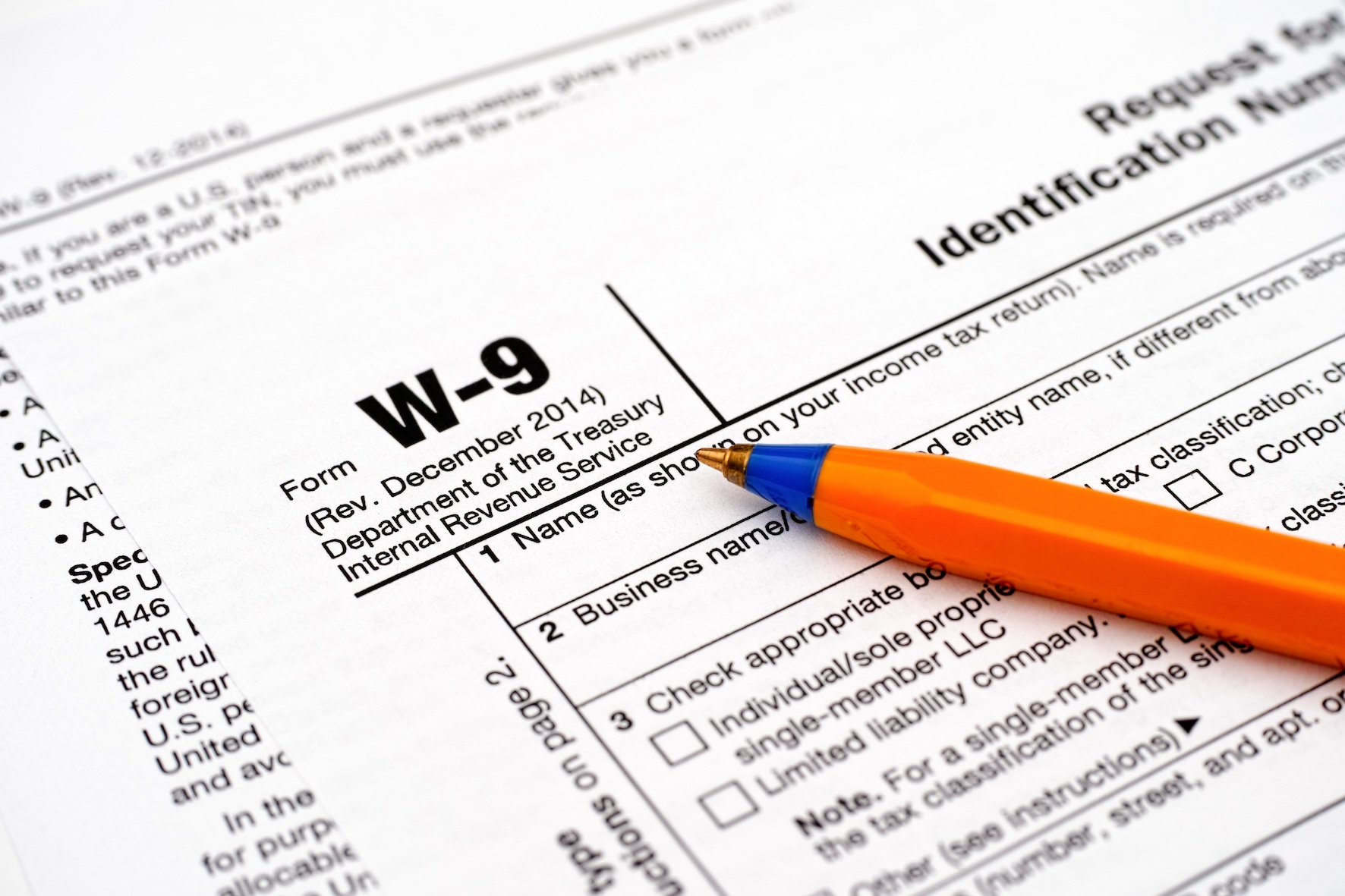
The IRS has released a draft of a revised Form W-9, giving organizations another reason to review how they collect, validate and maintain supplier tax information.
The draft Form W-9, dated June 2026, is not yet final and the IRS explicitly states that it should not be used for filing. However, it provides an early view of proposed changes and a timely reminder of the importance of accurate supplier tax data.
For organizations managing hundreds or thousands of suppliers, the issue is bigger than having the right version of a form.
It is about knowing whether the information you hold is accurate, whether it matches IRS records, and whether you can identify and resolve problems before they create payment, reporting or compliance issues.
What’s changing on the draft W-9?
The proposed revision includes a new category relating to certain U.S. digital asset brokers.
The change adds a new exemption option to Part II of the W-9 certification and a corresponding exempt payee code for certain U.S. digital asset brokers under the relevant IRS regulations.
For most organizations, this will be a relatively specific change, but the broader message is more important: supplier tax documentation continues to evolve, and organizations need processes that can adapt when requirements change.
The draft also reinforces the fundamental purpose of Form W-9: enabling organizations to obtain the correct taxpayer identification number (TIN) needed for information reporting, including 1099 reporting.
That makes accurate supplier data a critical part of the accounts payable and compliance process—not simply an administrative task.
The real risk isn’t the form. It’s what’s behind it.
A W-9 sitting in a supplier file does not necessarily mean your supplier tax data is accurate.
Names can change. Businesses can restructure. Tax classifications can change. TINs can be entered incorrectly. Suppliers can submit outdated information. And the organization making payments may not discover the problem until it receives an IRS notice or reaches the end of its reporting cycle.
The draft W-9 itself makes clear that the TIN provided must match the name given on the form to avoid backup withholding. It also states that backup withholding can be required at a rate of 24% in certain circumstances, including where the IRS tells the requester that an incorrect TIN has been provided.
The consequences can extend beyond the withholding itself. Incorrect supplier tax information can lead to:
- 1099 reporting errors
- IRS notices and corrective workflows
- Supplier payment disputes
- Additional accounts payable administration
- Manual supplier follow-up
- Potential penalties
- Year-end compliance firefighting
And the larger the supplier population, the harder it becomes to manage these issues manually.
Moving beyond the PDF
For many organizations, W-9 management still starts and ends with a PDF.
A supplier is asked to complete a form. Someone checks that a document has been received. The PDF is stored somewhere in the supplier record.
The problem is that this approach treats the W-9 as a document rather than what it actually represents: critical supplier tax data.
The better question is not simply: Do we have a W-9? It is: Do we have accurate, validated and current tax information for every supplier we need to report on?
That requires a more proactive approach to supplier information management.
Automating W-9 collection and verification
Achilles helps organizations manage this process by automating supplier W-9 collection and verification.
Instead of relying on manual requests and chasing suppliers for missing documentation, organizations can use digital workflows to request W-9 information during supplier onboarding and collect the required documentation directly from suppliers.
The process can then include TIN matching against IRS records, helping organizations identify incorrect name/TIN combinations before they become a reporting problem.
This creates a more controlled process for:
- Collecting: Request current W-9 information from suppliers through a digital workflow.
- Validating: Check that required information has been provided and identify potential errors.
- Matching: Validate supplier TIN information against IRS records to help identify name/TIN mismatches.
- Managing: Maintain supplier tax documentation as part of the wider supplier information record rather than as an isolated PDF.
- Resolving: Identify suppliers requiring attention so that issues can be addressed before they disrupt payments or reporting.
Don’t wait for the IRS to find the problem
The cost of poor supplier tax data is often hidden until something goes wrong.
A missing W-9 can trigger a request for information. An incorrect TIN can lead to an IRS notice. A mismatch can require supplier outreach and corrective filings. And a large supplier population can turn a small percentage of errors into a significant administrative burden.
The IRS draft is a useful reminder that W-9 requirements and reporting obligations can change. But organizations don’t need to wait for every regulatory update before improving their processes.
A stronger approach is to treat supplier tax information as a controlled data set—one that is collected digitally, validated, maintained and available when it is needed.
What should organizations do now?
Because the June 2026 W-9 is still a draft, organizations should continue to follow the IRS’s current requirements until the final form is issued.
In the meantime, this is a good opportunity to ask:
- How many of our suppliers require W-9 documentation?
- How much of our W-9 data is held as PDFs or spreadsheets?
- Do we validate supplier TINs against IRS records?
- How quickly can we identify suppliers with missing or potentially incorrect information?
- How often do we confirm that supplier tax information is still current?
- How much manual effort is involved in resolving W-9 issues?
- Could our current process cope with another change to the requirements?
If the answers depend on manual checks, spreadsheets and supplier chasing, there may be a simpler way.
Turn W-9 compliance into a controlled supplier process
W-9 management doesn’t have to be a year-end exercise.
Achilles helps organizations automate the collection and verification of supplier tax information, helping reduce exposure to backup withholding, 1099 reporting errors and the administrative burden of managing W-9 documentation at scale.