
Dean van Leeuwen is a futurist, author and co-founder of TomorrowToday Strategy Group. He is also co-host of Elephants in the Boardroom, the podcast sponsored by Achilles that explores the strategic forces reshaping business, leadership and global supply chains.
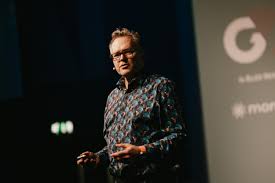
We spoke with Dean about the idea of the “Grey Elephant” and what it means for organizations dealing with increasing levels of supply chain disruption.
Q: Dean, what is a Grey Elephant?
A Grey Elephant is a visible, high-impact force of progress that has the potential to reshape an industry, organization or market.
Unlike Black Swans, Grey Elephants are not surprises. If we pay attention to the trends shaping the forces of progress, we can spot the weak signals of what is coming.
Grey Elephants emerge from the collision of the positive and negative side effects of progress. They create new markets, technologies and opportunities. But when organizations ignore them, underestimate their impact or fail to prepare, those same forces can become significant risks.
Pandemics are a good example. Rapid urbanization, ecological destruction, global mobility and the trade in wild animals have created conditions in which infectious diseases can spread more easily and much faster. COVID-19 itself was a shock, but the possibility of a global pandemic was not unknown. Governments, scientists and businesses had been warning about it for years. At TTSG, I had been researching and speaking on the disruptive impact of pandemics for a decade before the pandemic arrived. The Grey Elephant was visible. We simply failed to act until it stampeded through the global economy.
The strategic challenge is therefore not predicting the unpredictable. It is becoming much better at recognizing the major trends and weak signals that are already in sight.
Take artificial intelligence. AI has been developing for decades. In 2015, Ginni Rometty, then CEO of IBM, predicted that in the future every decision humans make would be informed by some form of AI.
At the time, that was a weak signal. Rometty was close enough to the technology to see where the underlying trend was heading. I have used that quote in almost every keynote I have given since 2015 because it captured something important long before generative AI made the direction obvious.
That is the point of looking for Grey Elephants. Weak signals often appear long before the force becomes impossible to ignore. The opportunity is to recognize them early enough to mitigate the downside and position yourself to maximise the upside.
You can think of the Grey Elephant model as an advanced warning radar to help you identify the weak signals of an approaching disruption ahead of time. As I often say to people, when a grey elephant appears it’s too late to prepare. That may sound a bit cheesy but it’s true. Spot it early and a risk can turn into an opportunity.
Q: One of the areas where Achilles is doing a lot of work right now, is supporting data center growth. How does that idea apply to the data center and wider tech sector?
Data centers are experiencing extraordinary growth, driven largely by cloud computing, AI and the enormous increase in demand for computing power.
That creates a huge opportunity.
But rapid growth also exposes dependencies that can easily become constraints.
Transformer availability. Grid capacity. Specialized cooling equipment. Skilled labor. Critical contractors. Access to energy.
None of these are hidden.
The Grey Elephant is the scale at which these forces are converging and whether organizations are adapting quickly enough.
The companies that understand those dependencies early can build more resilient supply chains, create better supplier partnerships and potentially secure an advantage over competitors. Those that ignore them may discover that their growth ambitions are constrained by infrastructure or suppliers they assumed would always be available.
Q: Why do supplier dependencies become a problem?
Because they usually build gradually.
A supplier becomes critical because they are reliable. A contractor becomes a preferred partner because they have delivered successfully before. A region becomes important because it has the infrastructure, skills and energy you need.
Individually, these are rational decisions.
Over time, however, organizations can find themselves dependent on a relatively small number of suppliers, contractors, technologies or locations.
China is a powerful example. It now accounts for around 91% of global refining of the rare earth elements used in high-performance magnets and more than 90% of graphite refining. It also occupies critical positions deep within pharmaceutical supply chains, particularly in the key starting materials used to manufacture essential medicines.
But none of this happened overnight.
China has spent decades building capability across strategically important supply chains through sustained industrial policy, investment, scale and long-term planning. The direction of travel was visible long before many Western businesses and governments began seriously questioning their dependence on these supply chains.
That is a classic Grey Elephant.
The dependency accumulates gradually until an event suddenly exposes its strategic importance. What looked like an efficient supply chain can very quickly become a vulnerability.
This is why visibility matters. Leaders need to understand not only their immediate suppliers, but the dependencies buried several layers deeper in their supply chains.
Being able to see those Grey Elephants early gives organizations the opportunity to mitigate the risks, diversify where necessary and potentially position themselves ahead of competitors.
You cannot manage a dependency you do not understand — and you cannot take advantage of a changing supply chain if you cannot see it.
Q: What, for example, are some of the biggest Grey Elephants in data center delivery today?
Some of the most visible forces include:
- dependence on a limited number of transformer and electrical equipment suppliers;
- growing competition for experienced construction and engineering talent;
- reliance on a relatively small pool of specialized contractors;
- long lead times for critical cooling and electrical infrastructure;
- constraints around grid access and power availability;
- and perhaps most importantly, the collision between explosive AI-driven demand for computing power and an electricity system that was never designed to expand at the same speed.
We are already seeing this play out across the United States.
In 2026, US regulators have been forced to look again at how very large electricity users such as data centers connect to the grid, while the Department of Energy has warned of a pressing need for additional transmission infrastructure to meet rapidly accelerating demand.
But this is not just an energy-generation problem. It is also a supply-chain problem.
Transformers, circuit breakers, substation components and other critical grid equipment are facing significant supply constraints, with some equipment taking two years or more to procure.
That is what makes this such an interesting Grey Elephant.
The growth of AI represents an enormous force of progress and opportunity. But that opportunity is colliding with electricity grids, infrastructure, skills and supply chains that cannot necessarily scale at the same speed.
None of these forces appeared overnight. The weak signals have been visible for years.
The real strategic question is therefore not whether these constraints exist.
It is whether organizations can see where the pressure points are building across their supply chains early enough to mitigate the risks — and potentially turn those constraints into competitive advantage.
Q: Have recent events changed the way organisations think about resilience?
Absolutely.
For years, many organizations optimised supply chains primarily around cost, efficiency and speed.
That logic produced enormous benefits, but it also created vulnerabilities.
Today, resilience is becoming a much more important part of the conversation.
Leaders are beginning to ask a different question. Not simply:
“Can we get what we need?”
But:
“What happens if we can’t?”
And increasingly:
“What can we do now to make sure we are better positioned than our competitors if conditions change?”
That shift changes how organizations think about suppliers, partnerships, data, risk and long-term planning.
Resilience is therefore not simply defensive. Done well, it can become a source of competitive advantage.
Q: What questions should leaders be asking themselves?
The most useful questions are often the simplest:
- Where are we most dependent?
- Which suppliers and contractors are genuinely critical to delivery?
- What dependencies exist beyond our immediate Tier 1 suppliers?
- Where are risks accumulating deeper within the supply chain?
- How quickly would we know if a critical supplier’s risk profile changed?
- Which assumptions about availability, capacity or infrastructure are we currently taking for granted?
- And importantly: where could better visibility allow us to act before our competitors do?
The goal is not to predict every disruption.
It is to build organizations capable of seeing important changes earlier, responding faster and turning those changes into opportunities.
Q: Final thoughts?
The biggest challenges and forces of change facing organizations are rarely completely invisible.
More often, they are the forces already taking shape around us that we have become accustomed to living with.
That is the nature of a Grey Elephant.
The organizations that thrive will not necessarily be those that predict the future most accurately. They will be the ones that become better at spotting the Grey Elephants already in the boardroom and acting before they start to stampede.
As the world becomes increasingly uncertain, understanding supplier dependencies, infrastructure constraints and emerging opportunities across the supply chain could become one of the most important sources of resilience — and competitive advantage — available to leaders.