
A High-ROI Control for Supplier Financial Risk in Supply Chains
Supplier financial failure is a persistent and costly driver of supply chain disruption. For mid-size and large enterprises, pre-screening suppliers for bankruptcies, liens, and judgments can deliver an estimated $250,000 to $2.5 million in annual avoided losses, with ROI frequently ranging from 5× to 20× the cost of screening.
While often treated as a “basic” due diligence step, financial screening is one of the few controls that is both predictive and actionable before contract award, allowing organizations to avoid high-cost supplier failures rather than react to them.
Platforms such as Achilles enable organizations to operationalize this screening at scale, embedding financial risk intelligence into supplier onboarding and ongoing monitoring.
1. Supplier financial failure is a structural risk
Supplier financial distress is not rare. It is statistically expected in diversified supply chains:
- 25% of companies report experiencing a supply disruption caused by supplier financial failure, including bankruptcies and liquidity crises [supplychaindive.com]
- 73% of organizations experienced at least one significant third-party disruption in the last three years, often with financial or operational root causes [assets.kpmg.com]
- U.S. corporate bankruptcy filings reached a 13-year peak in 2023, and remain elevated [spglobal.com]
Implication for U.S. procurement teams:
In a supplier base of hundreds of vendors, financially distressed suppliers will not be rare exceptions. Yhey are a recurring exposure.
2. The cost of supplier failure is disproportionately high
When a supplier fails, the financial impact is rarely limited to the contract itself. Costs typically cascade across operations:
- Production shutdowns and emergency sourcing
- Expedited logistics and tooling rework
- Lost deposits, progress payments, and stranded inventory
- Customer penalties and contractual non-performance
- Margin erosion from forced price premiums
Real-world evidence shows how quickly supplier failure escalates into enterprise-level loss: GM recorded $10B+ in costs linked to the bankruptcy of a key supplier (Delphi), and in another case, customers of a major automotive interiors supplier absorbed $665M in aggregate damages from a single supplier collapse.
Even in less extreme cases, firms face:
- Higher borrowing costs
- Emergency procurement premiums
- Multi-quarter margin pressure [jstor.org]
3. Financial Red Flags Are Detectable Before Onboarding
The advantage of bankruptcy, lien, and judgment screening is timing. These signals typically appear before commercial commitment, when avoidance is still low-cost.
Key indicators include:
- Bankruptcy filings (current or historical)
- Outstanding tax liens and UCC filings
- Civil judgments and creditor actions
- Patterns of legal or financial distress
These indicators are widely used in commercial credit and supplier risk frameworks and are supported by major data providers and risk authorities.
Critical insight:
Most catastrophic supplier failures are not sudden. They are preceded by observable financial deterioration.
4. Translating Risk into Annual Financial Benefit
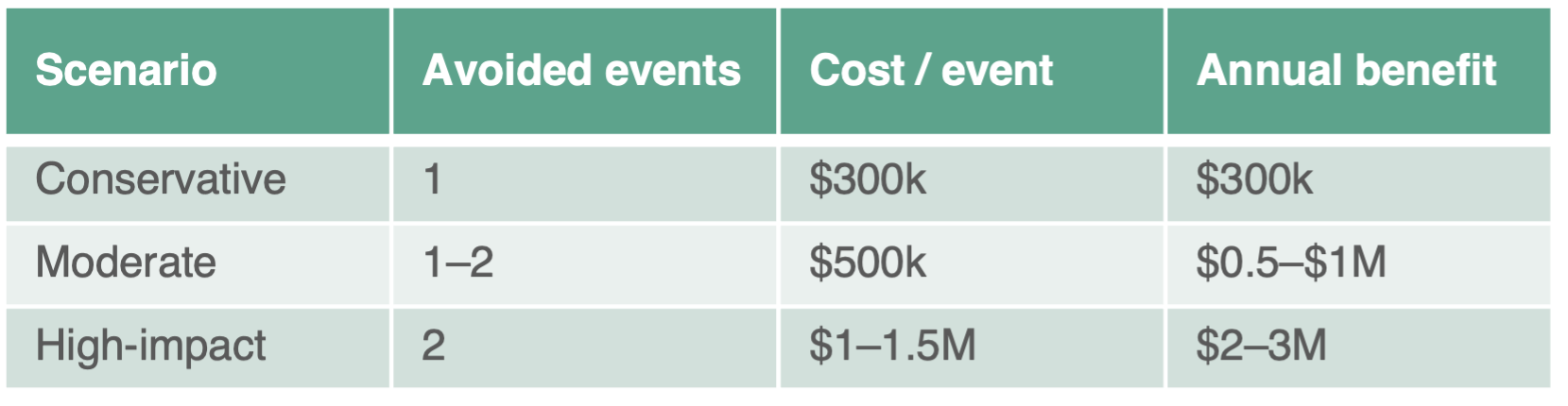
A conservative illustrative model for a mid-size U.S. enterprise:
Assumptions
- 200 active suppliers
- 3–5% show severe financial distress annually
- 1–2 would create meaningful disruption if onboarded
- Average impact per failure: $300K–$1.5M [onlinelibrary.wiley.com], [forvismazars.us]
Estimated Annual Avoided Loss
5. Cost of Screening vs. Value Protection
Typical cost of supplier financial screening:
- $50–$150 per supplier annually
For 200 suppliers:
- $10K–$30K per year total cost
This means:
- Avoiding a single moderate supplier failure can return 10×–100× ROI
- Screening cost is typically recovered many times over in avoided disruption
This aligns with broader third-party risk findings showing organizations can lose up to 90% of expected value from poorly managed vendor relationships [atlassystems.com].
6. Benefit by Organization Size
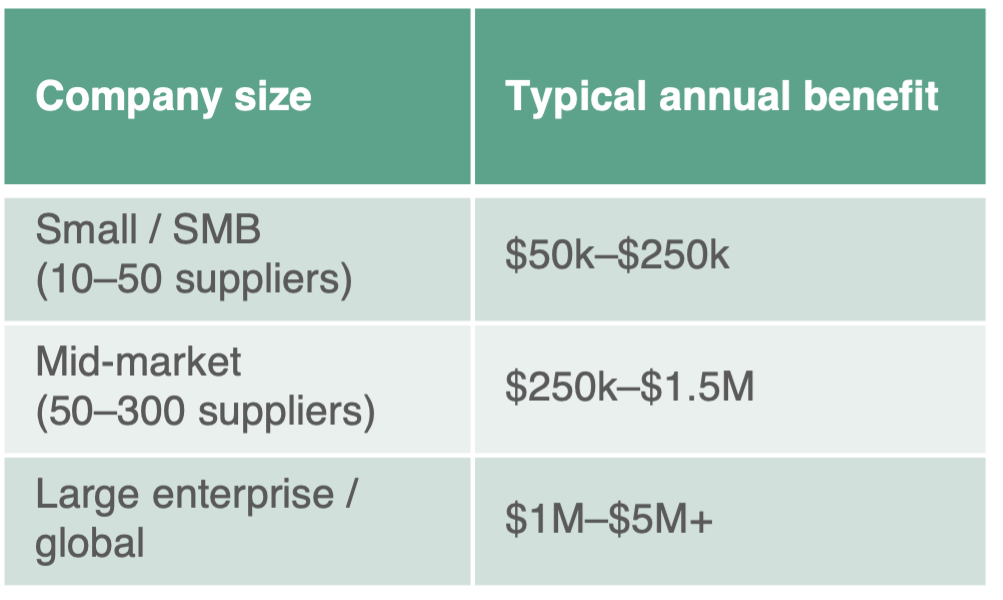
These figures reflect avoided disruption alone, not including secondary gains such as improved negotiation leverage, resilience, or reputational protection.
Conclusion: From Compliance Check to Financial Control
Bankruptcy, lien, and judgment screening is often positioned as a procedural onboarding step. In practice, it functions as a high-impact financial control that directly reduces avoidable loss in supply chains.
The combination of three factors makes it exceptional in procurement risk management:
- Supplier financial failure is common enough to be inevitable
- The financial impact is material and often severe
- The signals are detectable before commitment
When implemented systematically, organizations frequently recover the full annual cost of screening by preventing even a single supplier failure.
For enterprises operating in complex and high-volume supply networks, embedding structured financial screening through platforms such as Achilles transforms supplier selection from a transactional activity into a measurable risk-reduction strategy, protecting both operational continuity and financial performance.